
Mood is weather. Meaning is the ground you stand on.
TL;DR. Jesus spoke about hell more than anyone in scripture. He used four specific images. None of them match the cartoon. One line changes everything: hell is the prayer answered.
The Question Most People Get Wrong
Picture hell right now. What do you see? A devil with a pitchfork, a lake of fire, maybe a cave full of demons laughing.
That is not the hell Jesus described.
That is the hell of Dante's Inferno1, a 14th-century Italian poem dressed up by three centuries of cartoon imagery and 1980s evangelical scare tactics. The pitchforks, the molten lake, the horned demons: that geography comes from Dante, not from any Gospel passage.
A lot of people read those cartoon images, decide they cannot believe in that, and conclude they don't believe in hell at all. They never actually heard what Jesus said about it.
What Jesus Actually Said
Here is the part that surprises most readers.
Jesus referenced hell or final judgment dozens of times in the Gospels. Conservative scholars place the count somewhere between thirty and sixty references, depending on whether you include direct hell terminology, final-judgment language, or both2. Either way, He talked about eternal consequences more than the apostles combined.
The man we sometimes turn into a soft preacher was the most explicit voice in scripture on the subject of judgment.
He used four images for hell, and each one carries a different theological weight.
Image 1: Fire (Matthew 25:41). Not Dante's decorative flames, but the fire of judgment that consumes what cannot stand inside God's presence.
Image 2: Outer darkness (Matthew 25:30). A place outside the wedding feast where the party is real and ongoing. You are simply not at it.
Image 3: The worm that does not die (Mark 9:48). Quoted from Isaiah and reused by Jesus, this image captures the internal decay of rejection continuing without end.
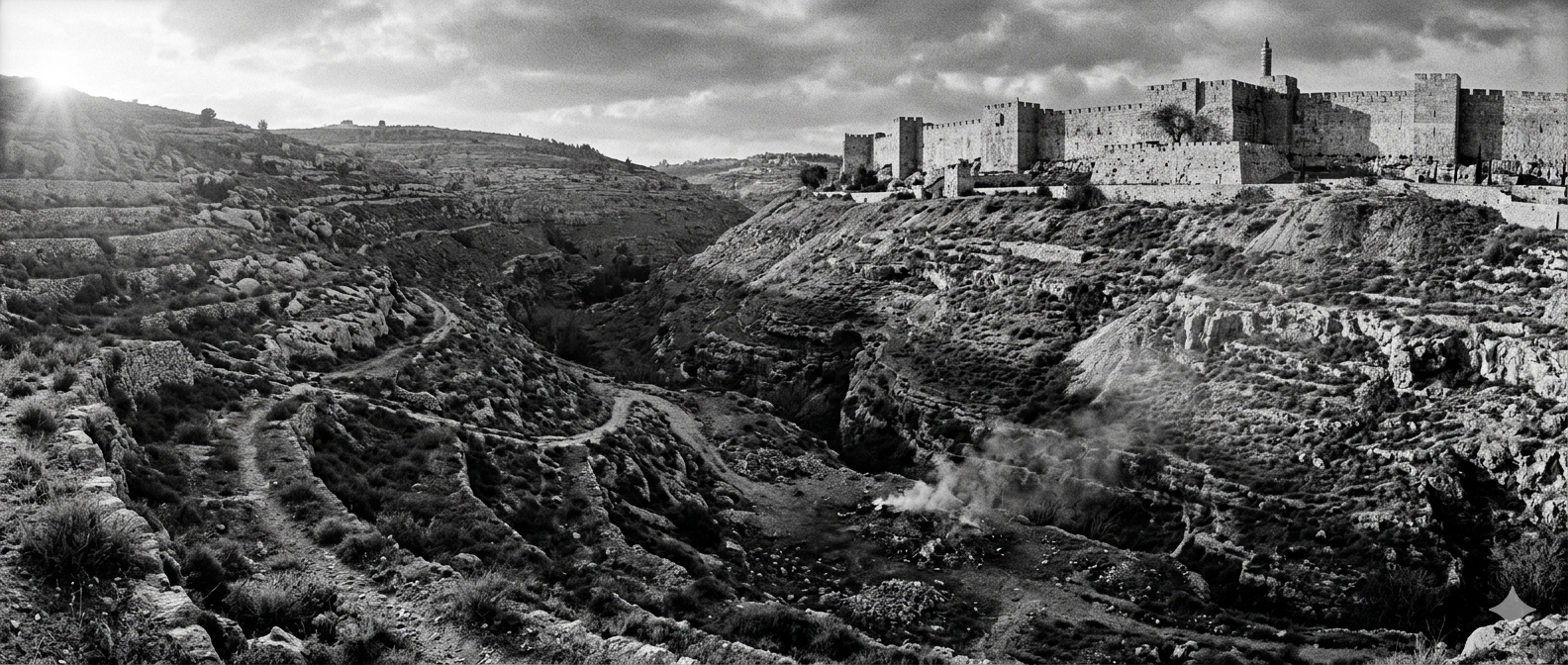
Image 4: Gehenna. The Valley of Hinnom outside Jerusalem, a literal municipal trash heap where garbage burned continuously throughout the year. Jesus chose this image on purpose.
That last image matters most. Hell is not a celestial torture chamber, and in Jesus's own vocabulary it functions more like the cosmic trash heap: the place where everything thrown out of the new creation finally goes.
The Reframe That Changes Everything
Here is the part most preachers miss entirely.
Hell is not God being cruel. Hell is what you get when God finally answers the prayer you have been praying your whole adult life.
The prayer is: leave me alone.
You said you wanted no God in your money, no God in your relationships, no God in your morning, no God in your Sunday, no God in the private room where you make your real decisions.
Hell is God saying: Okay.
Eternal separation, total autonomy, the exact arrangement you requested, granted forever and irrevocably.
C.S. Lewis put it this way in The Great Divorce3:
"There are only two kinds of people in the end. Those who say to God, 'Thy will be done,' and those to whom God says, 'Thy will be done.'"
Why Would God Allow This?
Because God made you to choose, and that capacity to choose is the precondition for love.
If God forced everyone into heaven against their will, that would not be love. That would be coercion wrapped in religious language.
The same human capacity that makes love possible, the ability to refuse, is also the thing that makes hell possible.
God respects the refusal. He will not un-make you in order to spare you.
But the Door Is Still Open
This is the part the cartoon hell completely hides.
Jesus did not talk about hell to terrify His listeners; He talked about hell to warn them, and then He walked to the cross and took the sentence Himself in their place.
The thief crucified next to Him asked, in his last conscious minutes, "Jesus, remember me."
Jesus answered, "Today you will be with me in paradise." (Luke 23:43, ESV.)
The door stays open until your last breath. That is the gospel in one sentence. The same Christ who described hell with four images also said He was preparing a specific place for you in His Father's house.
What This Means for You
If you have been treating hell as a Sunday school fairy tale, read Matthew 25 in its entirety, in Jesus's own recorded words, then decide what to do with what He said.
If you have been treating hell as your inheritance, the Cross is the way out.
The door does not close until you do.
Make the move today. Not "consider it," not "look into it." Make it. Tonight, when the room is quiet and the noise dies down. The thief on the cross did it in his last conscious minutes, and you have considerably more time than he had.
Common Questions
Did Jesus actually talk about hell more than anyone? Yes. Conservative scholars count dozens of references in the Gospels2. The count varies (some include final-judgment language, some only direct hell terms), but the floor is "more than the apostles combined."
Doesn't a loving God send everyone to heaven? The same Jesus who said "God is love" also said "depart from me" (Matthew 7:23, ESV), and love by its nature does not override the choice of the beloved. If God forced everyone into heaven against their resolved will, the result would be a kind of cosmic coercion, not love. The historical Christian position holds that God's love is precisely what makes a meaningful refusal possible.
Is hell eternal, or does it end (annihilationism)? Matthew 25:46 uses the same Greek word (aionios) for both "eternal punishment" and "eternal life," which creates a translation problem for the annihilationist position. If one of those eternities terminates, the other must terminate by the same linguistic logic. Conservative orthodox Christianity reads the parallel as deliberate, and concludes that hell is eternal conscious separation.
How is eternal punishment proportionate to finite sin? Two answers, each grounded in classical theology. First: sin is not measured by the discrete act but by the dignity of the One offended, so sin against an infinite God is infinite in moral scope. Second: the rebellion in hell does not stop. The rejection keeps rejecting. Eternity is therefore the continuation of the choice, not merely the consequence.
What about people who never heard about Jesus? Romans 1 says God's existence is evident in creation itself, so no person is finally without witness, and Romans 2 says God will judge justly according to the light each person actually received. The specifics for those who genuinely never heard are not fully revealed in scripture. What is revealed unambiguously: if you have heard, you are personally responsible to respond.
Why did Jesus use such graphic imagery? Because hell is real, and effective warnings about real danger have to land in the imagination, not just the intellect. A soft warning about a serious danger is itself a kind of lie. Jesus loved His listeners enough to describe the truth in images they would not forget.
Scripture Soil
- Matthew 25:31-46. Sheep and goats. Eternal punishment, eternal life.
- Mark 9:43-48. The worm and the fire.
- Luke 16:19-31. The rich man and Lazarus. The chasm fixed.
- Matthew 7:13-14. The narrow gate.
- Romans 10:9-10. How to be saved.
(All verses ESV. Look them up at esv.org.)
Further Reading on Meaning Over Mood
Coming next in this series: "Will Heaven Watch Hell Burn?", "Heaven Doesn't Need Evil to Be Good," and "You'll Be More Free in Heaven Than On Earth."
Anchor phrase: "Hell is the prayer answered." Share this with one person who actually needs it.
"For what will it profit a man if he gains the whole world and forfeits his soul?"
(Matthew 16:26, ESV.)
Footnotes
-
Dante Alighieri, Inferno, ca. 1320. Public domain text via Project Gutenberg (gutenberg.org/ebooks/1001). The popular Western image of hell as fire, demons, and pitchforks descends from Dante's geography, not from any Gospel passage. ↩
-
D. A. Carson, The Gagging of God: Christianity Confronts Pluralism, Zondervan, 1996 (ISBN 978-0310478713). Carson catalogs Jesus's hell and final-judgment references across the Synoptics and John. Independent counts by Robert A. Peterson (Hell on Trial, 1995) and Edward Fudge (The Fire That Consumes, 3rd ed., 2011) land in the same magnitude range. ↩ ↩2 ↩3
-
C. S. Lewis, The Great Divorce, HarperOne edition (1946; reissue 2001), Chapter 9, p. 75. Public summary at cslewis.com. ↩
●Get the next dispatch
Subscribe.
One dispatch when it ships. No follow-ups. No spam.